
Most content syndication campaigns generate leads, but very few generate real pipeline.
The problem is not content – it’s targeting.
Many B2B marketers focus on volume: more downloads, more impressions, more leads. But without relevance, these leads rarely convert. Sales teams end up wasting their energy filtering out unqualified and cold leads, while marketing struggles to prove ROI beyond surface metrics.
This is where intent-driven content syndication makes the difference.
Instead of focusing on how many leads you generate, it focuses on who those leads are and how ready they are to buy.
Intent data allows marketers to identify in-market buyers who are actively researching solutions. When combined with content syndication, it ensures your content reaches the right audience at the right time, increasing the likelihood of meaningful engagement and conversion.
What Is Intent-Driven Content Syndication?
Intent-driven content syndication is a targeted strategy that uses intent data to deliver content to users actively researching specific solutions.
In simple terms, it ensures your content reaches people who are already looking for what you offer.
Traditional content syndication focuses on broad distribution across third-party platforms. While this approach helps increase visibility, it often lacks precision in lead targeting. As a result, marketers may generate leads that are early-stage, misaligned, or not ready to engage with sales.
Intent-based syndication refines this process by layering intent signals on top of distribution networks. It ensures that your content is promoted only to users who have demonstrated relevant buying behavior.
This approach aligns marketing efforts with buyer readiness and improves overall campaign efficiency. Effective syndication is not just about scale. It is about reaching the right buyers at the right stage.
Types of Intent Signals
Understanding intent signals is critical to executing buyer intent content strategy effectively. These signals provide insights into buyer behavior and readiness.
Behavioral Intent Signals
Behavioral signals track user actions across digital properties. These include website visits, content downloads, keyword searches, and time spent on specific pages.
For example, a user repeatedly visiting pages related to cloud security solutions indicates growing interest in that category. These patterns help identify high-intent prospects.
Firmographic Signals
Firmographic data focuses on company-level attributes such as industry, company size, revenue, and location.
This data ensures alignment with your Ideal Customer Profile. Even if a prospect shows strong behavioral intent, they might not be relevant if they do not match your target market.
Engagement Signals
Engagement signals measure how prospects interact with your content. This includes email opens, clicks, webinar participation, and asset consumption.
These signals help determine the depth of interest and can indicate progression through the funnel.
By combining these three types, marketers can build a more accurate picture of buyer intent and prioritize outreach accordingly.
How Intent Improves Lead Quality
Lead quality is one of the biggest challenges in content syndication. Many campaigns generate large volumes of leads that do not convert into pipeline.
Improves targeting precision: It helps marketers to identify users who are actively researching relevant topics. Marketers can ensure their content reaches a qualified audience.
Enhances engagement: When content aligns with buyer needs, prospects are more likely to interact with it meaningfully.
Shortens the sales cycle: High-intent syndicated leads are often further along in their decision-making process, making them more receptive to sales conversations.
Ultimately, intent data-driven campaigns improve content syndication lead quality by filtering out low-intent audiences and prioritizing those with genuine purchase intent.
Based on actual campaign performance across B2B SaaS clients:
Example:
A B2B SaaS company targeting cloud security ran two campaigns:
Campaign A (Traditional Syndication):
- 500 leads generated
- Only 20 SQLs
- Low sales engagement
Campaign B (Intent-Driven Syndication):
- 220 leads generated
- 75 SQLs
- 3x higher conversion rate
Key difference: Targeting based on intent signals like repeated content consumption and keyword research activity.
Tools and Data Sources for Intent
Executing high-intent lead generation requires access to reliable intent data sources and platforms.
First-Party Data
First-party data comes from your own digital ecosystem. This includes website analytics, CRM data, and marketing automation platforms.
It is highly accurate and provides direct insights into how prospects interact with your brand.
Third-Party Intent Data Providers
Third-party providers aggregate data from multiple publishers and platforms to identify users researching specific topics.
These providers help expand your reach beyond owned channels and uncover new opportunities.
Content Syndication Platforms
Not all platforms provide the same level of accuracy. Campaign success depends on how well intent data is filtered and applied.
Modern syndication platforms integrate intent data into their targeting capabilities. They allow marketers to filter audiences based on behavior, firmographics, and engagement.
These platforms play a critical role in executing buyer intent content syndication strategies at scale.
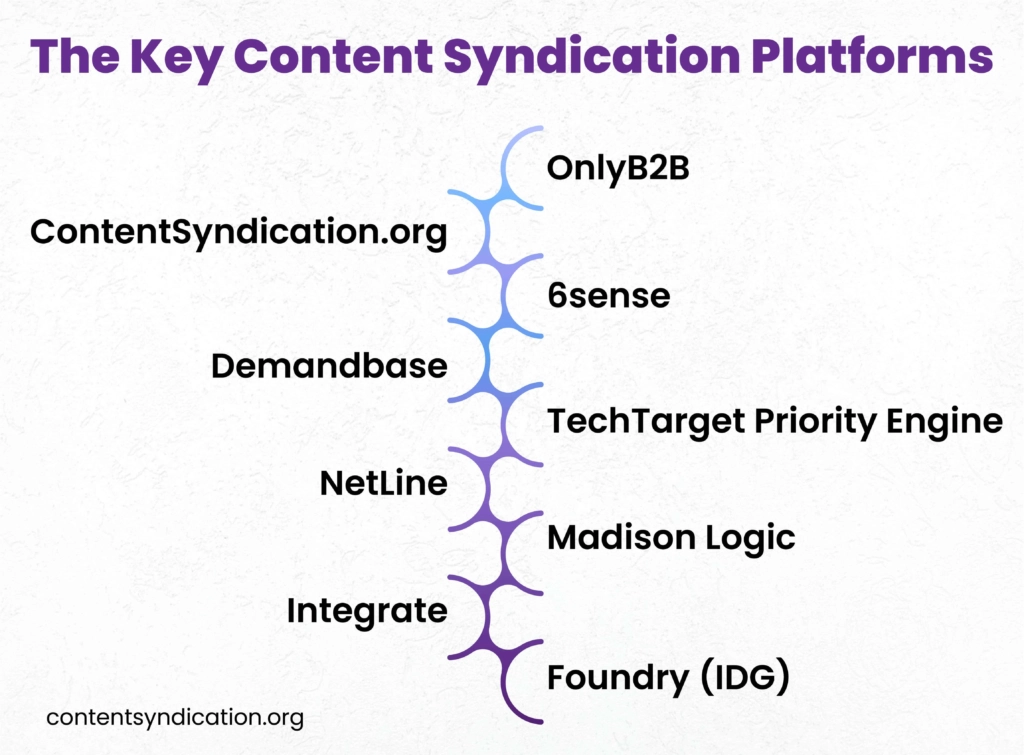
By combining these tools, marketers can build a comprehensive view of the buyer journey and optimize campaign performance.
How to Build Intent-Based Campaigns
Building an effective intent-based syndication requires a structured approach.
Step 1: Define Your Ideal Customer Profile
Start by clearly defining your ICP. Identify the industries, company sizes, and roles that are most relevant to your offering.
Step 2: Map Intent Signals to Buying Stages
Different signals indicate different levels of readiness. Early-stage signals may include general research, while late-stage signals may involve product comparisons.
Mapping these signals helps align content with buyer needs.
Step 3: Select the Right Content
Choose content assets that match each stage of the funnel. Educational content works well for early stages, while case studies and demos are more effective for decision stages.
Step 4: Activate Syndication Channels
Distribute your content through platforms that support intent-based targeting. Ensure your campaigns are configured to reach users who meet your criteria.
Step 5: Measure and Optimize
Track not just CPL, but conversion rate, lead quality, and pipeline contribution. Continuously refine your targeting and content strategy based on insights.
This step-by-step approach ensures that your intent-driven content syndication efforts are aligned with business goals and deliver measurable outcomes.
Mistakes to Avoid
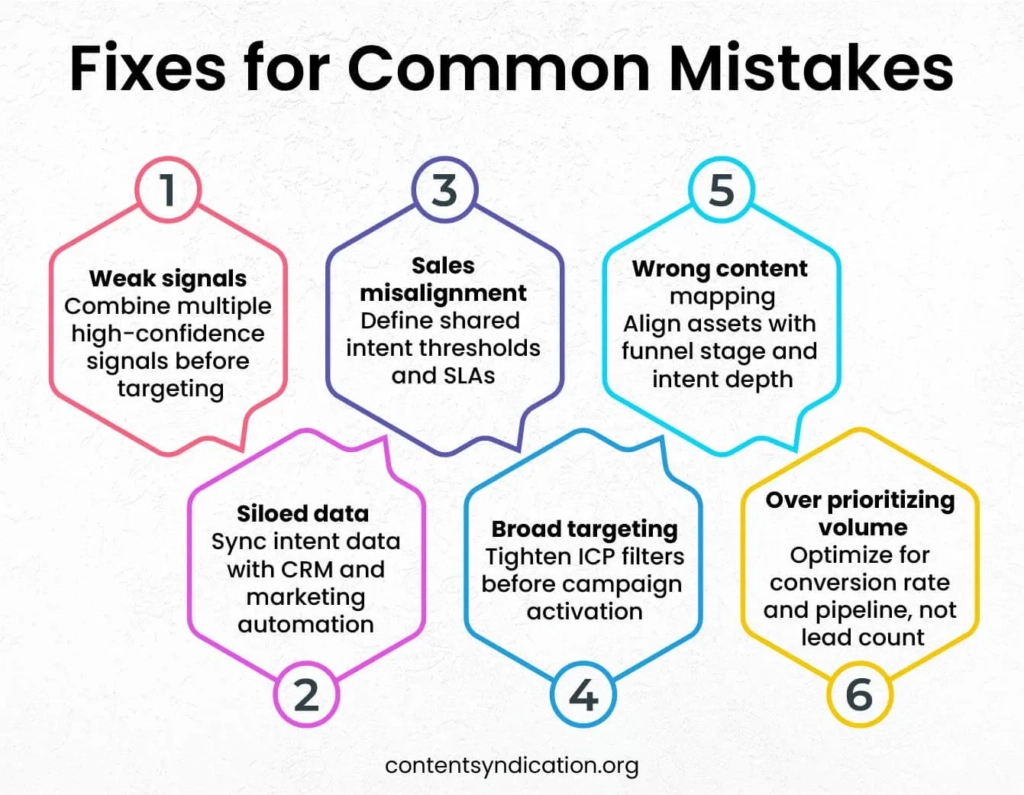
While high-intent lead generation offers significant advantages, there are common pitfalls that marketers should avoid.
Over-Reliance on Weak Signals
Not all intent signals are equal. Relying on low-quality or ambiguous signals can lead to poor targeting and wasted spend.
Ignoring Data Integration
Intent data should not exist in isolation. Failing to integrate it with CRM and marketing automation systems limits its effectiveness.
Misalignment with Sales
If sales teams are not aligned with marketing on intent criteria, high-quality leads may not be prioritized correctly.
Avoiding these mistakes ensures that your strategy remains focused and effective.
Best Practices for Intent-Driven Content Syndication
To maximize the impact of buyer intent content strategy, consider the following best practices.
- Combine multiple data sources for a holistic view of intent
- Align content with specific buyer stages
- Continuously refine audience segments based on performance
- Collaborate closely with sales teams
- Prioritize quality over quantity in lead generation
These practices help ensure that your campaigns deliver consistent and scalable results.
Frequently Asked Questions
1. What is intent-driven content syndication for B2B lead generation?
It is a strategy that uses intent data to target and engage prospects who are actively researching solutions, improving the effectiveness of content distribution.
2. How to use intent data in content syndication?
Marketers can use intent data to identify relevant audiences, segment them based on behavior, and deliver tailored content through syndication platforms.
3. What are intent signals?
Intent signals are indicators of buyer interest and behavior, such as content consumption, search activity, and engagement levels.
4. How does intent improve lead targeting?
Intent data enables precise lead targeting by focusing on prospects who are actively showing interest in specific topics or solutions.
Conclusion
In today’s B2B landscape, generating leads is easy. Generating revenue is not.
Intent-driven content syndication bridges this gap by focusing on buyers who are already in-market and ready to act.
The real question is no longer:
“How many leads did you generate?”
It is:
“How many of those leads were actually ready to buy?”