
In B2B marketing, campaign success is closely tied to the quality of the data behind it. Even the most compelling content offer can underperform if it reaches the wrong audience, contains inaccurate contact information, or fails to align with buyer interests.
This is where first-party data content syndication becomes increasingly important. As privacy regulations evolve and data reliability becomes a growing concern, marketers are shifting their focus toward trusted data sources that provide greater accuracy, transparency, and relevance.
High-performing syndication campaigns are no longer built solely on content distribution. They are built on quality audience intelligence. When marketers leverage reliable audience data, they can improve engagement, generate better leads, and create stronger pipeline opportunities.
In today’s competitive B2B environment, understanding the value of first-party data content syndication is essential for maximizing campaign outcomes and long-term marketing performance.
What Is First-Party Data in B2B Marketing?
B2B first-party data refers to information collected directly from prospects, customers, and subscribers through owned channels and interactions.
These interactions may include:
- Website visits
- Content downloads
- Webinar registrations
- Newsletter subscriptions
- Event participation
- Product demo requests
- Survey responses
Because the information comes directly from user engagement, it offers a more accurate view of audience interests, behaviors, and purchase readiness.
Unlike externally sourced databases, first-party data reflects real interactions between buyers and brands. This direct relationship creates stronger visibility into audience preferences and provides marketers with a dependable foundation for campaign planning.
As organizations prioritize data-driven demand generation, first-party data content syndication has emerged as a valuable approach for connecting relevant content with qualified audiences.
Why It Matters for Content Syndication
The effectiveness of any syndication campaign depends on reaching the right people at the right time with the right message.
When campaigns are powered by first-party data, marketers gain access to audiences that have already demonstrated engagement through direct interactions. This increases the likelihood that distributed content reaches individuals who are more aligned with campaign objectives.
Key benefits include:
- More relevant audience selection
- Better engagement rates
- Higher lead quality
- Improved conversion potential
- Stronger marketing efficiency
Another major advantage is alignment with buyer intent. Audience actions such as content consumption, webinar participation, or resource downloads can provide valuable signals about interests and purchase considerations.
These signals help marketers create more informed syndication strategies and improve overall campaign effectiveness.
Ultimately, first-party data content syndication enables organizations to move beyond broad distribution and focus on precision-driven audience engagement.
First-Party Data vs Third-Party Data
Understanding the difference between first-party and third-party data is essential when evaluating audience acquisition strategies.
First-Party Data
- Collected directly from audience interactions
- Higher reliability and freshness
- Greater transparency
- Easier compliance management
- Better alignment with actual engagement behavior
Third-Party Data
- Acquired from external providers
- May include outdated information
- Limited visibility into collection methods
- Potential compliance challenges
- Lower audience relevance in some cases
When comparing first-party data vs third-party data in B2B marketing, the primary distinction comes down to trust and accuracy.
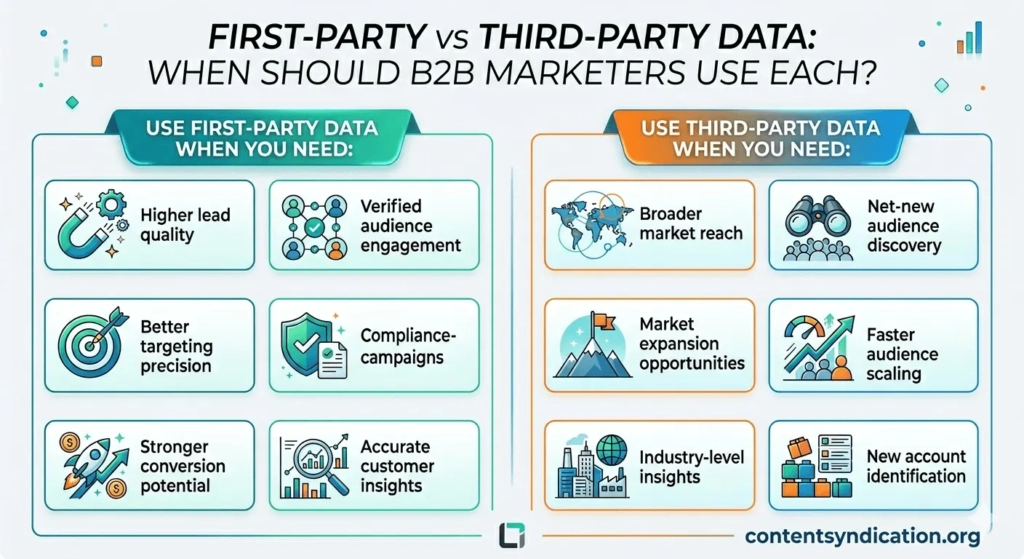
While third-party data can support broader reach initiatives, first-party data typically provides deeper audience insight and stronger campaign alignment. This is particularly valuable in content syndication programs where relevance significantly impacts performance outcomes.
As privacy standards continue to evolve, many organizations are increasing investments in first-party data content syndication to improve both effectiveness and compliance readiness.
How First-Party Data Improves Lead Accuracy
Lead quality remains one of the most important metrics in any demand generation strategy.
One of the biggest advantages of first-party data is improved lead accuracy. Because information is collected directly from audience interactions, marketers can better validate audience fit and engagement levels.
Accurate data helps reduce common challenges such as:
- Duplicate records
- Invalid contact information
- Outdated job titles
- Incorrect company details
- Misaligned audience segments
Better data quality contributes directly to stronger sales and marketing alignment. Teams spend less time filtering unqualified contacts and more time engaging with relevant prospects.
Also, improved accuracy can positively influence conversion rates, nurture performance, and sales productivity. When audience information is dependable, every stage of the buyer journey becomes more efficient.
Role of Compliance and Trust
Modern marketing success requires more than audience reach. It also requires responsible data practices.
The growing importance of data privacy has transformed how organizations collect, manage, and activate audience information.
First-party data supports stronger compliance because it is gathered through direct interactions where users voluntarily share information. This creates opportunities to build campaigns around consent-based leads that have explicitly agreed to engage with marketing communications.
Compliance considerations are especially important for organizations operating across global markets. Many businesses prioritize GDPR compliant leads to reduce risk and maintain regulatory alignment.
Beyond legal requirements, trust plays a critical role in campaign success.
When buyers understand how their information is collected and used, they are more likely to engage with future communications. Transparent data practices help strengthen brand credibility and support long-term audience relationships.
As a result, first-party data in content syndication not only improves targeting outcomes but also contributes to sustainable and ethical marketing operations.
How to Use First-Party Data for Better Targeting
Effective syndication campaigns rely on strategic audience selection.
Organizations can improve audience targeting by using first-party insights to build highly relevant audience segments based on engagement patterns and business characteristics.
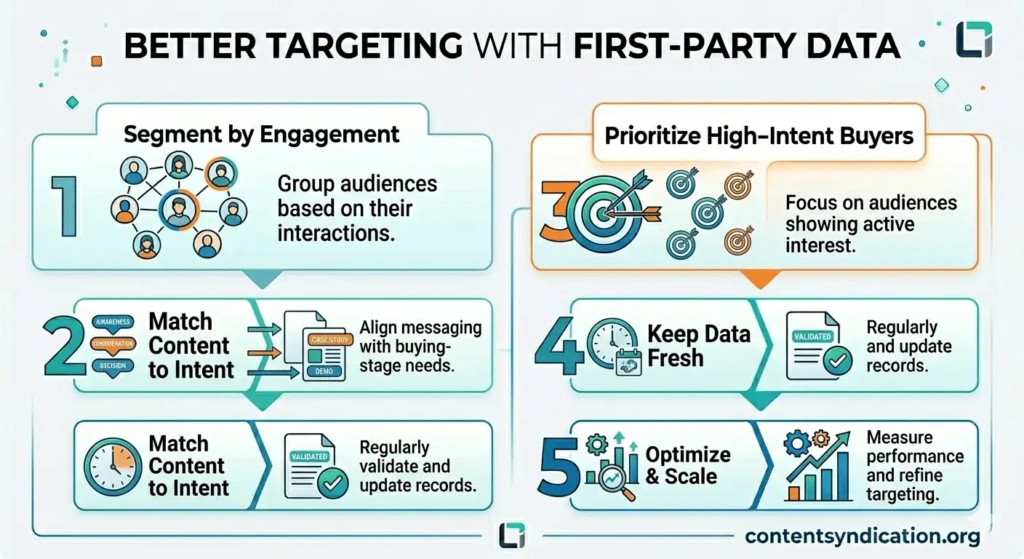
Best practices include:
1. Segment by Engagement Behavior
Group audiences based on actions such as:
- Content downloads
- Webinar attendance
- Resource consumption
- Product research activity
This allows marketers to tailor messaging according to demonstrated interests.
2. Align Content with Funnel Stage
Different prospects require different content experiences.
For example:
- Educational assets for awareness-stage audiences
- Solution-focused content for evaluation-stage buyers
- Case studies for decision-stage prospects
3. Combine Intent Signals with Audience Insights
Direct engagement data provides valuable context that helps prioritize outreach efforts and improve relevance.
4. Continuously Refresh Audience Data
Regular validation ensures information remains accurate and useful for campaign execution.
5. Measure and Optimize Performance
Monitoring campaign performance helps identify which audience segments, content assets, and engagement patterns generate the strongest results.
Organizations that consistently analyze and refine their targeting strategies often achieve greater efficiency from first-party data content syndication initiatives.
FAQs
1. Why does first-party data matter in content syndication?
First-party data provides direct insight into audience interests and engagement behavior, allowing marketers to deliver more relevant content to qualified prospects and improve campaign outcomes.
2. Is first-party data more reliable than third-party data?
In most cases, yes. Since the information comes directly from audience interactions, it is generally more accurate, current, and transparent than externally sourced data.
3. How does first-party data improve lead quality?
It enables marketers to identify engaged audiences, validate audience fit, and reduce inaccuracies that can negatively impact lead generation efforts.
4. Can first-party data support compliance requirements?
First-party data is typically collected through direct interactions and permission-based processes, making it easier to maintain compliance with modern privacy regulations.
5. How often should marketers update first-party data?
Data should be reviewed and refreshed regularly to maintain accuracy and ensure effective audience segmentation and campaign execution.
Reach Verified B2B Buyers with Quality Data-Driven Campaigns
Successful syndication programs begin with trusted audience intelligence. By prioritizing first-party data content syndication, organizations can improve lead quality, strengthen targeting precision, support compliance efforts, and drive better business outcomes.
As data reliability becomes a defining factor in marketing success, investing in verified, engagement-driven audience strategies can help organizations generate more meaningful conversations and accelerate pipeline growth.
Reach verified B2B buyers with quality data-driven campaigns and turn better data into better results.