

“Make your customer the hero of your stories.” – Ann Handley.
This guide breaks down B2B product content syndication-what it is, where to syndicate product assets, and how to measure ROI.
In B2B marketing, buyers don’t connect with products-they connect with outcomes. That’s why positioning your product as the “hero” rarely works. Instead, successful brands align their product messaging with the buyer’s real-world challenges, research behavior, and decision journey.
B2B product content syndication helps brands do exactly that-by distributing consistent, accurate, and buyer-focused product content across third-party platforms where decision-makers actively research, compare, and shortlist solutions.
But how do you connect your product story to your buyer’s journey at scale?
In this guide, you’ll learn:
- What B2B product content syndication is
- Why it matters for modern B2B teams
- Common challenges and how to overcome them
- Real-world examples of successful execution
By the end, you’ll have a clear framework to build a winning B2B product content syndication strategy and unlock scalable growth.
So what exactly is B2B product content syndication?
What Is B2B Product Content Syndication?
B2B product content syndication is the strategic process of republishing your B2B product-related content across relevant online platforms-such as high-authority websites, industry publications, and communities-to showcase your product’s value where decision-makers actively research and compare solutions.
Must Read: What is B2B Content Syndication? A Comprehensive Guide
Where B2B Product Content Gets Syndicated
Here are the most common places where B2B product content is syndicated.
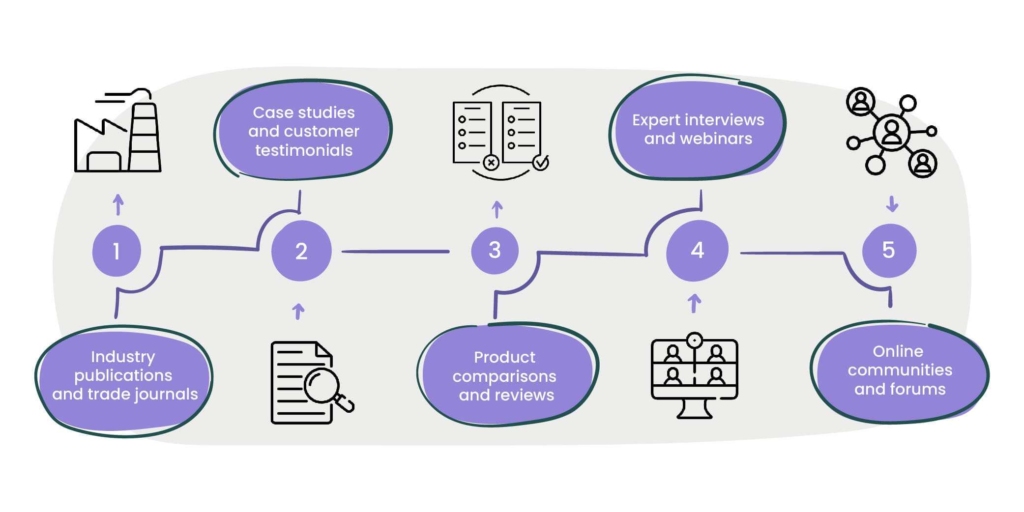
Content can be republished/distributed across platforms like:
- Industry publications and trade journals
- Case studies and customer testimonials platforms
- Product comparisons and review pages
- Expert interviews and webinars
- Online communities and forums
Why It Matters: Benefits of B2B Product Content Syndication
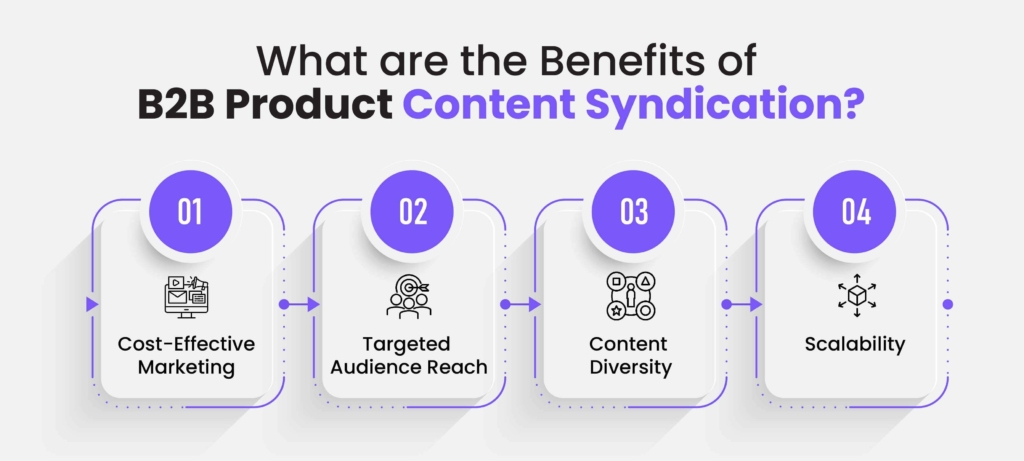
B2B product content syndication helps you scale product visibility and demand by delivering your product story across the channels where buyers research and compare solutions.
Cost-Effective Marketing
Leverage existing product content to reach a wider audience without significant additional costs.
Targeted Audience Reach
Choose syndication channels your buyers already use for highly focused outreach.
Content Diversity
Promote different content formats (pages, demos, case studies, assets) across new audiences.
Scalability
Scale distribution by adding new channels as your marketing efforts grow.
Must Read: Types of B2B Content Syndication
Common Challenges in B2B Product Content Syndication (and How to Solve Them)
In today’s fast-changing technology landscape and evolving buyer behavior, marketers face the challenge of staying relevant amid constant digital noise. To overcome these challenges, it’s important to understand them clearly upfront.
Below are some of the most common challenges in B2B product content syndication-and how to solve them.
Identifying the Right Channels
The wide range of B2B content syndication channels makes careful selection essential. Choosing the wrong channels can dilute your message and reduce impact.
One size doesn’t fit all. To truly engage buyers, your content must align with both the audience’s needs and the platform’s intent.
To simplify:
Content Quality × Targeted Channel Selection = Increased Engagement
Selecting the right channels depends on:
- Your target audience
- Their online research behavior
- Your specific marketing goals
For example, niche industry publications may work best for brand awareness, while platforms like LinkedIn are often more effective for lead generation.
Crafting Compelling, Platform-Specific Content
Simply republishing the same content everywhere rarely works. Each platform has its own tone, audience expectations, and format constraints.
To improve performance:
- Adapt messaging for each channel
- Align content depth with audience intent
- Respect platform-specific formats and guidelines
Tailored content consistently drives better engagement and trust.
Measuring Success Effectively
Measuring the impact of product content syndication requires tracking the right metrics.
Key indicators include:
- Website traffic from syndicated sources
- Lead generation and conversion quality
- Brand mentions and visibility
- Engagement metrics on syndication platforms
Clear tracking helps you understand what’s working and where to optimize.
How to Create a Winning B2B Product Content Syndication Strategy
Now, let’s walk through practical steps to overcome the challenges and build a syndication strategy that consistently drives reach, engagement, and qualified demand.
Selecting the Right Channels
Target audience first:
Start by understanding where your ideal buyers spend time online. Which publications, platforms, and communities do they trust and engage with? Use audience research tools (or platform insights) to map their behavior.
Align with your goals:
Define what you want from syndication-brand awareness, lead generation, or website traffic. Different channels support different outcomes, so channel selection should match the goal.
Explore the channel landscape:
Shortlist and test channels such as:
- Industry publications
- Social platforms (LinkedIn, X (Twitter))
- Content discovery networks (Outbrain, Taboola)
- Niche online communities
Content Optimization
Maintain brand consistency:
Adapt content for each platform, but keep your core product messaging, voice, and positioning consistent. Consistency builds recognition and trust.
Leverage visuals:
Use strong visuals like infographics, charts, and images to improve understanding and engagement across platforms.
Optimize for readability:
Match content length and complexity to the platform format. Social posts typically need shorter, punchier messaging, while whitepapers and reports can go deeper. Keep formatting scannable (subheads, bullets, short paragraphs).
Best Practices for B2B Product Content Syndication
Use canonical links or no-index tags: Ensure syndicated content points back to the original source to avoid duplicate content issues.
Create platform-specific landing pages: Use dedicated pages with UTMs to track performance and improve conversion accuracy.
Focus on one clear CTA per asset: Avoid confusing buyers-each syndicated asset should drive one primary action.
Validate and qualify leads: Capture role, company size, and region to maintain lead quality.
Layer retargeting and nurture: Use retargeting and email workflows to move MQLs toward SQLs.
Real-World Examples of B2B Product Content Syndication
Here are some practical examples of how B2B companies can use product content syndication:
- Cybersecurity company: Syndicates a blog post on “The Latest Cybersecurity Threats and Solutions” on relevant industry publications.
- Marketing automation software company: Syndicates a white paper on “Boosting Lead Generation with Email Marketing” via content discovery platforms.
- Cloud storage provider: Syndicates a customer success case study on a relevant business news website.
Now you may be wondering how to measure and track syndication success. Let’s break it down.
Measuring and Tracking Syndication Success
Identify Key Metrics
Define metrics based on your goal. Common metrics include:
- Website traffic (referrals)
- Lead generation
- Brand mentions
- Content downloads
- Engagement (platform-level + social)
Use Tracking Tools
Use analytics from syndication platforms + your MarTech stack to track performance across channels. Integrate marketing automation/CRM to capture and attribute leads generated from syndicated content.
Optimize Using Data
Review performance regularly to identify what’s working and what isn’t. Use insights to refine:
- targeting and placements
- channel selection
- content formats
- messaging & CTAs
Case Studies: B2B Companies Winning with Syndication
Here are a few widely referenced examples of how well-known B2B brands have used content syndication to expand reach and influence buyer decisions:
Buffer (Audience Expansion + Engagement)
Buffer is often cited for using syndication across major business and marketing publications to reach a broader audience-driving stronger website traffic and increasing engagement. The big takeaway: channel fit + platform-specific tailoring matters more than just republishing content.
Dell (Brand Visibility + Product Discovery)
Large enterprise brands like Dell have historically used syndication and distribution through major publications and tech media to amplify product awareness and drive visitors back to owned assets. The takeaway: consistent visibility across trusted platforms builds recall over time.
American Express (Credibility + Reach at Scale)
Brands like American Express have used syndication to extend content reach via mainstream business media, improving awareness and engagement. The takeaway: trust transfer from credible publications can lift performance across the funnel.
Frequently Asked Questions (FAQ)
What is B2B product content syndication?
B2B product content syndication is the process of distributing product-focused content—like datasheets, demos, and case studies—across third-party platforms to increase visibility, attract qualified leads, and drive product engagement.
How does product content syndication help in lead generation?
By publishing your product content on high-authority industry sites, you reach more potential buyers. When interested readers engage with your content, you can capture their details and qualify them as leads based on intent signals.
What types of content work best for product syndication?
The best formats include product datasheets, explainer videos, comparison guides, use-case articles, whitepapers, and customer success stories. These assets provide value and context for decision-makers evaluating solutions.
What channels are used for product content syndication?
Popular channels include:
- Industry publications (TechCrunch, CIO.com)
- B2B networks like LinkedIn
- Content discovery platforms like Outbrain or Taboola
- Email lists, forums, and product review sites like G2 or TrustRadius
Is B2B product content syndication SEO-friendly?
Yes. When done correctly with canonical tags or no-index directives, syndication can increase backlinks, brand mentions, and visibility—without causing duplicate content issues.
How do I measure the success of my syndication campaign?
Key metrics include:
- Referral traffic from syndication sources
- Lead volume and quality
- Engagement (downloads, views, clicks)
- Backlinks and domain authority growth
- ROI through conversion tracking
How is product syndication different from general B2B content syndication?
Product syndication focuses on content that highlights features, benefits, and use cases of your actual offerings, whereas general syndication might involve thought leadership or industry trend articles aimed at awareness rather than conversions.
If you want end-to-end product content syndication (targeting + distribution + lead capture), explore our B2B content syndication services.