

In B2B marketing, cost per lead (CPL) is often treated as the ultimate measure of success. However, a low CPL does not automatically translate to revenue or meaningful pipeline growth. Leads may be inexpensive, but without proper qualification and nurturing, they rarely become opportunities. Understanding how content syndication impacts revenue requires shifting focus from raw volume to the quality of leads and their contribution to the sales pipeline.
Content syndication drives growth by placing high-value content in front of targeted, in-market buyers, helping marketers identify and engage prospects who are more likely to convert. When campaigns are aligned with revenue goals, syndicated content not only generates leads but also strengthens the sales pipeline, ensuring measurable impact on both opportunity creation and closed revenue.
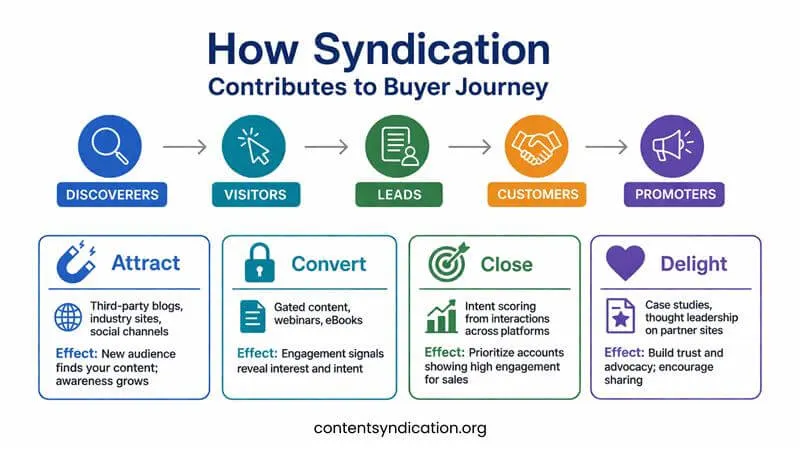
What Revenue Means in Content Syndication
Revenue in content syndication is not just the money that eventually comes in from closed deals. It is a measure of how the leads acquired through syndication contribute to the broader pipeline and influence business outcomes. This includes:
- Direct revenue: Deals closed with leads sourced from syndication campaigns.
- Pipeline acceleration: How quickly leads move from awareness to opportunity stages.
- Influenced revenue: Contributions to deals where syndicated leads engaged with sales or marketing touchpoints.
When evaluating content syndication revenue, organizations must consider both direct and indirect impacts to fully understand ROI and the true business value of campaigns.
How Syndication Contributes to Pipeline
Content syndication drives pipeline by connecting your content to highly relevant, in-market buyers. Unlike organic or inbound strategies, syndicated campaigns reach audiences already consuming industry-specific content.
Key ways syndication impacts the pipeline include:
- Broader reach of ICPs: Syndicated content lands directly in front of target decision-makers.
- Lead enrichment: Networks often provide additional firmographic and behavioral data.
- Nurture-ready leads: Engaged leads can be funneled into email sequences or retargeting campaigns to move them closer to SQL status.
Understanding content syndication pipeline impact requires tracking how these leads behave and progress through the funnel, ensuring your content investment translates into tangible opportunities.
How Lead Progression Takes Place
A clear lead progression framework is essential to understand how content syndication drives pipeline and revenue. Follow these steps:
- Targeted Lead Capture: Syndicated content reaches highly relevant, in-market buyers. These leads are already engaged with industry-specific content, increasing their likelihood to respond and engage meaningfully.
- Initial Qualification: Leads are assessed for alignment with your Ideal Customer Profile (ICP) and their level of engagement with syndicated content. This early qualification ensures only relevant prospects move forward.
- MQL Identification: Leads showing intent, frequent engagement, or downloading key assets become Marketing Qualified Leads (MQLs). Syndicated leads tend to move faster to MQL status due to their pre-existing interest and content consumption patterns.
- SQL Handoff and Sales Engagement: MQLs are further evaluated for readiness to engage with sales. Syndicated leads often have richer behavioral and firmographic data, helping sales prioritize follow-ups and accelerate decision-making.
- Pipeline Acceleration: Due to the higher quality and intent of syndicated leads, they progress through the sales funnel faster than cold leads. Each interaction, nurtured content, and engagement touchpoint helps shorten the sales cycle.
- Revenue Conversion: Sales works these qualified leads to close deals, directly impacting revenue. Syndication’s role in providing relevant, decision-ready prospects ensures higher conversion rates and measurable contribution to pipeline and revenue.
Mapping this step-by-step progression ensures your content syndication campaigns are designed not just to capture leads but to convert them into pipeline opportunities and ultimately revenue.
Key Metrics You Should Be Tracking
To quantify the impact of content syndication on revenue, tracking these core metrics is recommended:
- Marketing Qualified Leads (MQLs): Indicates the quality of leads generated from syndication. High MQLs show your content reaches relevant, in-market buyers.
- Sales Qualified Leads (SQLs): Tracks which leads are ready for sales. SQLs reflect how syndicated leads accelerate decision-making and move faster through the funnel.
- Click-Through Rate (CTR): Shows how effectively your content engages the target audience, signaling relevance and interest.
- Bounce Rate: Measures engagement quality. Lower bounce rates suggest leads are consuming content, increasing the likelihood of conversion.
- Conversion & Pipeline Contribution: Tracks leads that become opportunities and revenue. This directly ties syndication efforts to measurable business impact.
Tracking these content syndication performance metrics provides a holistic view of how campaigns move the needle on business outcomes.
How to Calculate Content Syndication ROI
Calculating ROI for B2B content syndication involves linking spend to pipeline and revenue outcomes. Steps include:
- Track all costs: Syndication fees, content production, and internal resources.
- Assign revenue attribution: Determine which deals were influenced by syndicated leads.
- Measure pipeline impact: Sum the total value of influenced opportunities.
- Compute ROI: Use the formula:
Content Syndication ROI = (Revenue from Syndication Leads – Total Syndication Costs) / Total Syndication Cost * 100
B2B marketers seeking content syndication ROI should prioritize multi-touch attribution models to capture both direct and influenced revenue, ensuring campaigns are evaluated accurately.
Common Mistakes
Many B2B organizations fall into common syndication pitfalls:
- Mistake: Focusing on volume over quality.
Fix: Prioritize lead relevance.
- Mistake: Ignoring lead nurturing.
Fix: Implement follow-up sequences and multi-touch engagement.
- Mistake: Lack of proper attribution.
Fix: Track campaigns using CRM tags and multi-touch attribution.
- Mistake: Misaligned ICP targeting.
Fix: Ensure content reaches the right audience through precise targeting.
Avoiding these mistakes is crucial to maximize the revenue from content syndication and improve overall campaign effectiveness.
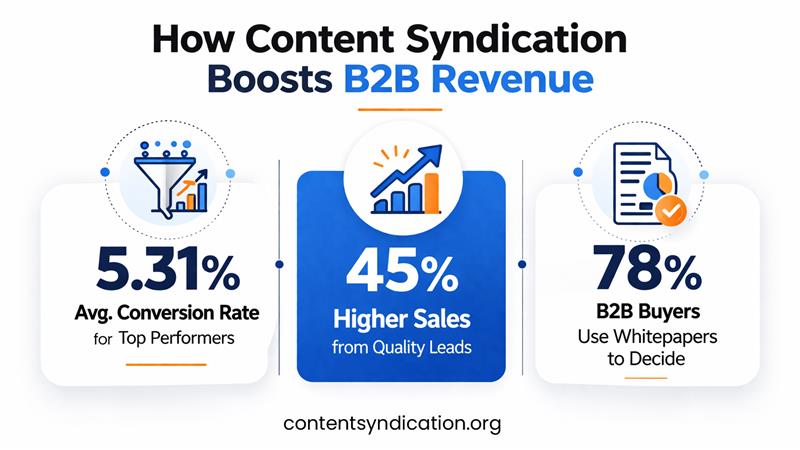
How to Improve Revenue Impact
To enhance revenue outcomes from content syndication:
- Prioritize ICP alignment: Target the right audience to increase lead quality.
- Integrate with CRM: Automate lead capture and scoring to accelerate the MQL to SQL transition.
- Employ multi-touch attribution: Track engagement across channels to measure true impact.
- Test formats and networks: Experiment with different content types and syndication partners to find the most effective combinations.
- Optimize follow-up sequences: Ensure sales and marketing teams nurture leads efficiently.
By implementing these strategies, marketers can directly influence content syndication, lead to revenue, and strengthen pipeline contribution.
Frequently Asked Questions
1. What is content syndication revenue?
Content syndication revenue refers to the value generated by leads sourced from syndicated campaigns, including both closed deals and influenced pipeline opportunities.
2. How do I measure ROI from content syndication?
ROI is measured by linking total revenue from syndicated leads against campaign costs. Multi-touch attribution ensures both direct and influenced revenue is captured.
3. Can syndication drive pipeline even if leads do not convert immediately?
Yes. Syndicated leads often enter nurturing programs, gradually converting to SQLs. This reflects the content syndication pipeline impact over time.
4. What are common mistakes in content syndication?
Common errors include prioritizing lead quantity over quality, failing to attribute revenue correctly, and misaligning campaigns with the ICP.
5. How to improve revenue from syndicated content?
Focus on audience targeting, integrate CRM tracking, use multi-touch attribution, test content formats, and optimize lead follow-up.
Final Thoughts
Understanding how content syndication impacts revenue is critical for B2B marketers aiming to generate tangible business outcomes. Beyond lead volume, the focus should be on lead quality, pipeline contribution, and proper revenue attribution. By measuring content syndication revenue, optimizing campaign targeting, and following a structured lead-to-revenue flow, organizations can maximize ROI and accelerate pipeline growth.